


Cable Glands: Complete Guide to Types, Materials, Applications, Benefits, IP Ratings & Installation

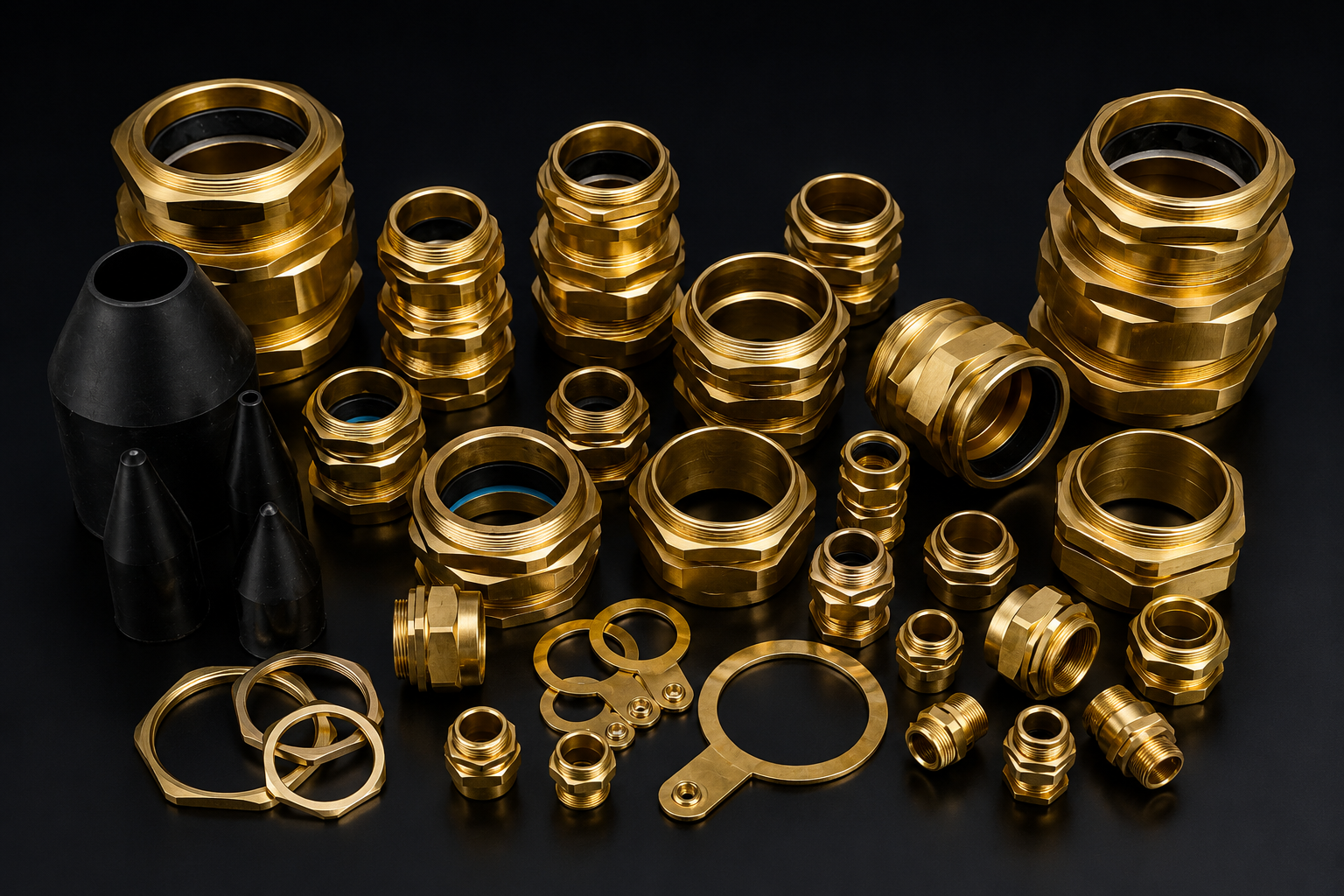
Cable glands are one of the most important components in electrical installations, ensuring safe and secure cable entry into electrical equipment, enclosures, junction boxes, and control panels. They shield cables from dust, humidity, vibration, and mechanical stress, all without impairing the integrity of electrical systems. Cable glands are used in industrial plants, commercial buildings, renewable energy projects, marine installations, telecommunications, and residential developments to enhance safety, reduce maintenance, and extend equipment life.
A cable gland is a mechanical device used to enter a cable, and it fastens and secures the end of an electrical cable to the equipment. It provides strain relief, cable retention, and protection from dust, water, oil, and other contaminants. Cable glands are available in a variety of materials, thread types, and IP ratings and are suitable for a wide range of indoor and outdoor applications.
Types of Cable Glands
Nylon cable glands are corrosion resistant and lightweight for general installations. Brass cable glands are ideal for industrial applications providing excellent mechanical strength, whereas stainless steel cable glands are suitable for corrosive and marine applications. A1 cable glands are for unarmored indoor cables. A2 cable glands offer additional sealing for indoor and outdoor use. BW cable glands are intended for use with indoor steel wire-armored cables, and CW cable glands provide a weatherproof seal for outdoor armored cable installations. Cable glands EMC for reducing electromagnetic interference and explosion-proof cable glands for hazardous environments.
Key Features
Cable glands provide secure cable retention, effective strain relief, waterproof and dustproof sealing, UV resistance, corrosion protection, vibration resistance, long service life, and easy installation. They are available in multiple thread types and sizes to suit different cable diameters.
Benefits
Using the correct cable gland improves electrical safety, prevents cable movement, protects equipment from moisture and contaminants, minimizes maintenance, extends equipment lifespan, and ensures reliable long-term performance.
Applications
Cable glands are widely used in electrical panels, control panels, distribution boards, junction boxes, industrial automation, manufacturing plants, solar power systems, wind energy projects, oil and gas facilities, marine installations, telecommunications, data centers, HVAC systems, water treatment plants, commercial buildings, and residential projects.
Materials
Common materials include nylon, brass, nickel-plated brass, stainless steel, and aluminum. Material selection depends on the installation environment, corrosion resistance, mechanical strength, and operating conditions.
IP Ratings
IP65 protects against dust and water jets, IP66 provides protection against powerful water jets, IP67 is suitable for temporary immersion, and IP68 offers protection for continuous immersion under specified conditions.
How to Choose the Right Cable Gland
Select a cable gland based on cable diameter, cable type (armored or unarmored), installation environment, thread type, IP rating, operating temperature, UV exposure, and material compatibility.
Installation & Maintenance
Choose the correct gland size, install the cable carefully, tighten the compression nut to achieve a secure seal, and periodically inspect glands for loose fittings, damaged seals, corrosion, or water ingress to maintain reliable performance.
Cable glands are essential for safe and reliable electrical installations. Choosing the correct type, whether nylon, brass, stainless steel, A1, A2, BW, CW, EMC, or explosion-proof, along with the appropriate material and IP rating, helps ensure long-lasting protection, improved safety, and dependable electrical performance.